How AI Is Transforming Customer Operations in 2026
Customer operations are changing quickly. What was once handled through manual routing, repetitive support work, and disconnected systems is increasingly being managed through AI.
In 2026, businesses are not just using AI to answer questions. They are using it to improve decision-making, automate workflows, reduce friction, and create more responsive customer operations.
This shift is not limited to chatbots. It includes AI-powered ticketing, routing, workflow orchestration, content generation, agent assistance, and real-time operational intelligence.
In this guide, we’ll look at how AI is transforming customer operations in 2026 and why this evolution matters across industries.
Customer Operations Are Moving Beyond Manual Workflows
Traditional customer operations often depend on teams manually reviewing cases, moving information between systems, and deciding what should happen next.
That model is difficult to scale. As request volume grows, so do delays, inconsistencies, and operational costs.
AI changes this by helping teams automate not only repetitive tasks, but also parts of the decision-making process.
That means customer operations are shifting from reactive workflows to adaptive systems.
Where AI Is Creating the Biggest Impact
In 2026, AI is transforming customer operations in several important ways.
1. Faster Ticket Routing
AI systems can classify incoming requests, detect urgency, and route cases based on intent, sentiment, or customer history. This reduces delays and improves resolution speed.
2. Better Support Automation
AI can handle common support scenarios, answer repetitive questions, and guide customers through self-service workflows without requiring human intervention every time.
3. Smarter Workflow Execution
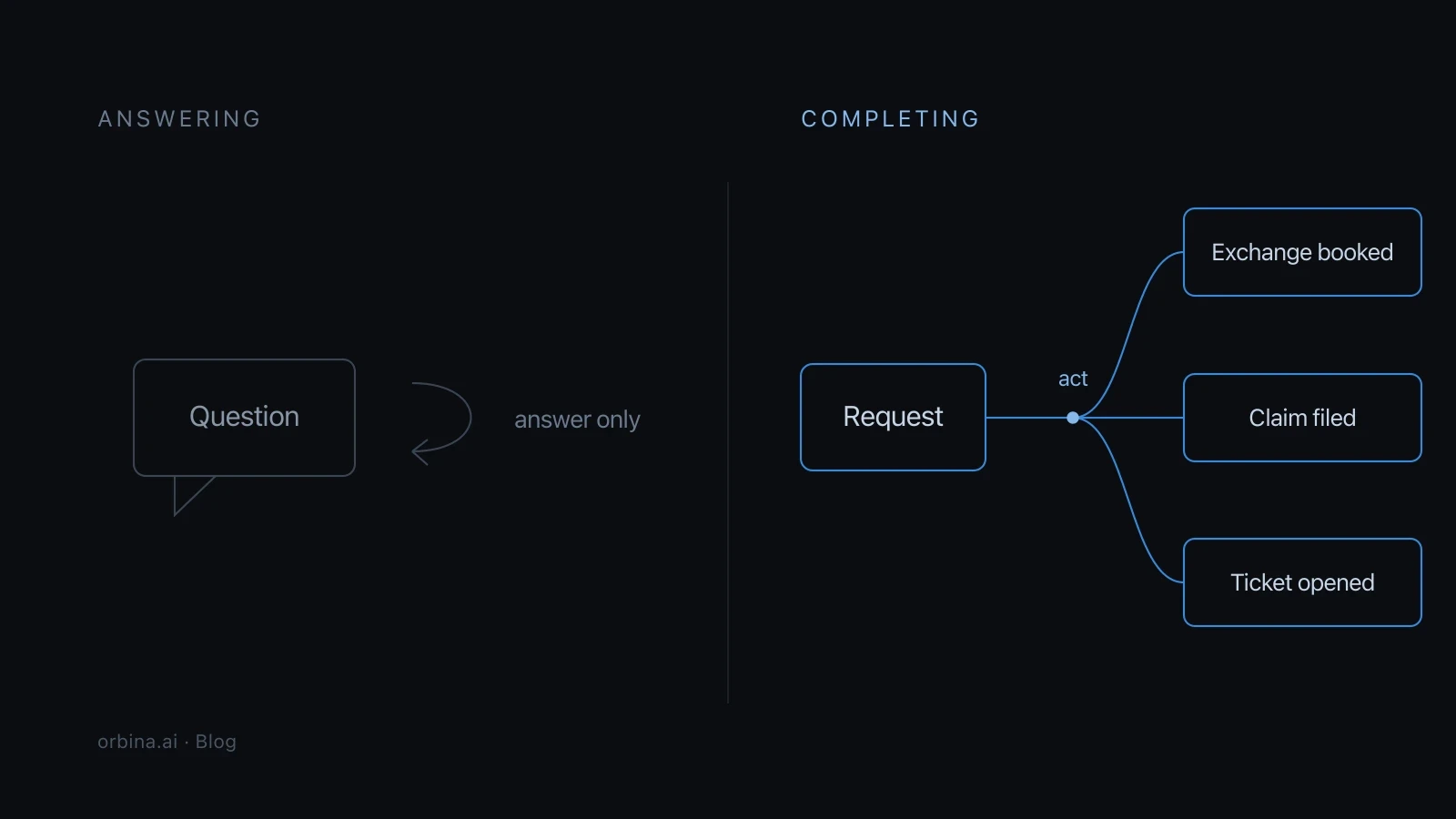
More advanced systems do not stop at answering. They trigger workflows, update records, check policies, and coordinate next steps across business tools.
4. Improved Agent Productivity
AI copilots and assistance layers help human teams respond faster, summarize context, and reduce repetitive back-office work.
5. More Consistent Decisions
AI can apply logic more consistently across operational workflows, reducing variation and helping teams scale with greater confidence.
What AI-Powered Customer Operations Look Like
The difference between traditional and AI-enabled customer operations becomes clearer in comparison:
Area | Traditional Operations | AI-Enabled Operations |
|---|---|---|
Routing | Manual or rule-based | Intent- and context-driven |
Support handling | Human-heavy | Hybrid or automated |
Workflow execution | Fragmented | Orchestrated across systems |
Response time | Slower | Faster |
Decision consistency | Variable | More standardized |
The result is not just greater efficiency. It is a different operational model.
Why 2026 Feels Different
AI has influenced customer support for years, but 2026 marks a more meaningful shift because AI is increasingly connected to business systems and workflows.
Instead of operating as a separate chat layer, AI now plays a role in:
CRM updates
policy checks
case resolution
escalation handling
onboarding journeys
customer communication workflows
This is what makes AI more operational and less experimental.
The Strategic Value for Businesses
For business leaders, AI in customer operations is no longer just a cost-saving tool. It is becoming a strategic capability.
Organizations that modernize customer operations with AI can often achieve:
faster resolution times
lower service costs
better customer experience
more scalable support models
reduced operational bottlenecks
Most importantly, they can handle growth without scaling manual effort at the same pace.
Challenges Businesses Still Need to Solve
Although the benefits are significant, successful adoption still requires careful design.
Common challenges include:
weak integration with existing systems
poor data quality
unclear escalation rules
lack of governance around AI actions
difficulty measuring real operational impact
The companies that succeed are usually the ones that treat AI as part of operations, not just as a standalone tool.
AI is transforming customer operations in 2026 by moving businesses away from disconnected, manual processes and toward more intelligent, coordinated systems.
The biggest change is not that AI can speak to customers. It is that AI can now support, route, decide, and help execute the next step in the workflow.
That shift is changing what customer operations teams can automate—and how far they can scale.
Frequently Asked Questions
How is AI transforming customer operations in 2026?
AI is improving customer operations through faster routing, support automation, smarter workflow execution, and better decision consistency across teams and systems.
Is AI only being used for customer support chats?
No. AI is also being used for workflow orchestration, ticket triage, CRM updates, escalation handling, and operational decision support.
What are examples of AI in customer operations?
Examples include AI-powered ticket routing, self-service support flows, agent copilots, onboarding automation, and intent-based workflow execution.
Why is AI more important in customer operations now?
Because businesses need to manage higher volumes, improve response times, reduce costs, and connect customer-facing workflows with backend systems.
Can AI reduce customer support costs?
Yes. AI can reduce manual workload, improve self-service, shorten handling time, and increase efficiency across customer operations.
Does AI replace human teams in customer operations?
Not entirely. In most cases, AI works best as a support layer that automates repetitive work and assists humans in more complex scenarios.
What is the difference between AI support and AI operations?
AI support usually focuses on conversations and responses, while AI operations include routing, workflow execution, decision-making, and system coordination.
What industries benefit most from AI customer operations?
Industries such as e-commerce, insurance, telecommunications, financial services, and SaaS businesses often see strong benefits due to high-volume workflows.
What challenges do companies face when adopting AI in customer operations?
Common challenges include poor integration, weak governance, limited visibility into performance, and unclear rules for escalation or handoff.
What is the biggest opportunity in AI customer operations?
The biggest opportunity is turning customer operations into a more scalable, adaptive, and intelligent system rather than a manual support function.