What Is a Decision Engine in AI Systems?
As AI systems become more operational, one concept appears more often in automation architecture: the decision engine.
A decision engine is not the part of the system that talks to users or stores data. Its role is to determine what should happen next.
In simple terms, a decision engine in AI systems evaluates inputs, applies logic, and selects the best action or outcome based on the available information.
This makes it one of the most important components in workflows that require prioritization, eligibility checks, routing, approvals, or next-step recommendations.
What Does a Decision Engine Actually Do?
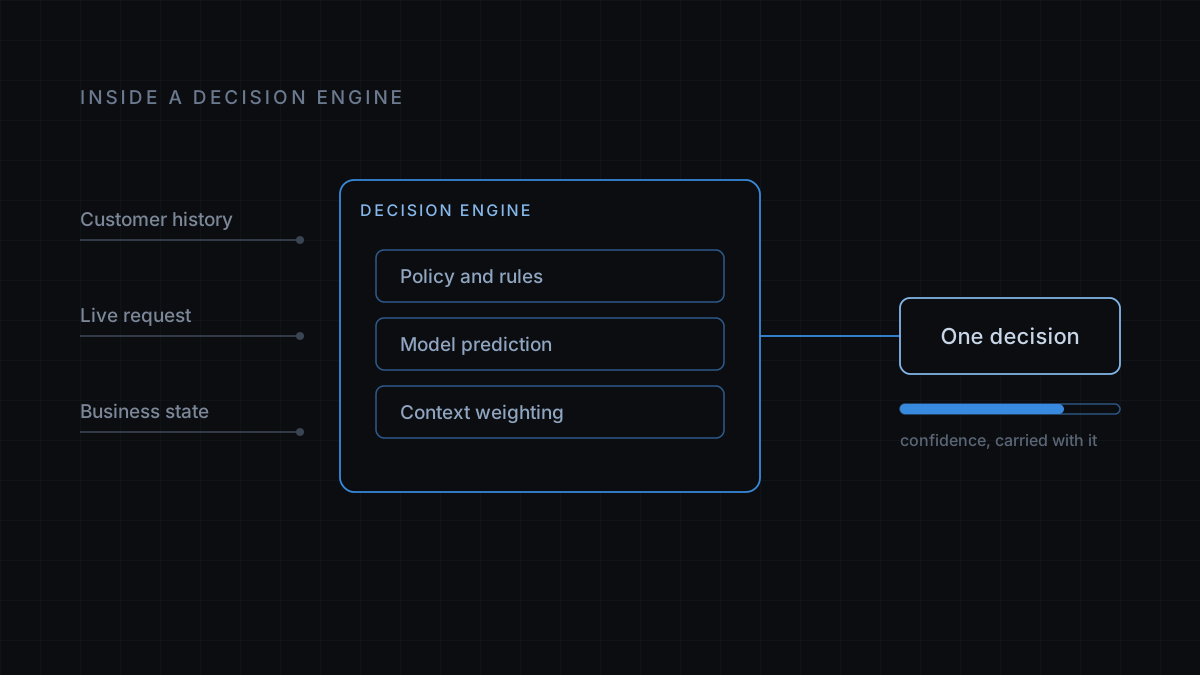
A decision engine receives information from one or more sources, evaluates that information using defined logic or models, and outputs a decision.
That decision might include:
approving or rejecting a request
selecting the next workflow step
assigning a priority level
choosing which system or team should handle a case
triggering an automated action
Unlike a simple rule trigger, a decision engine can combine multiple variables and support more nuanced outcomes.
Why Decision Engines Matter in AI Systems
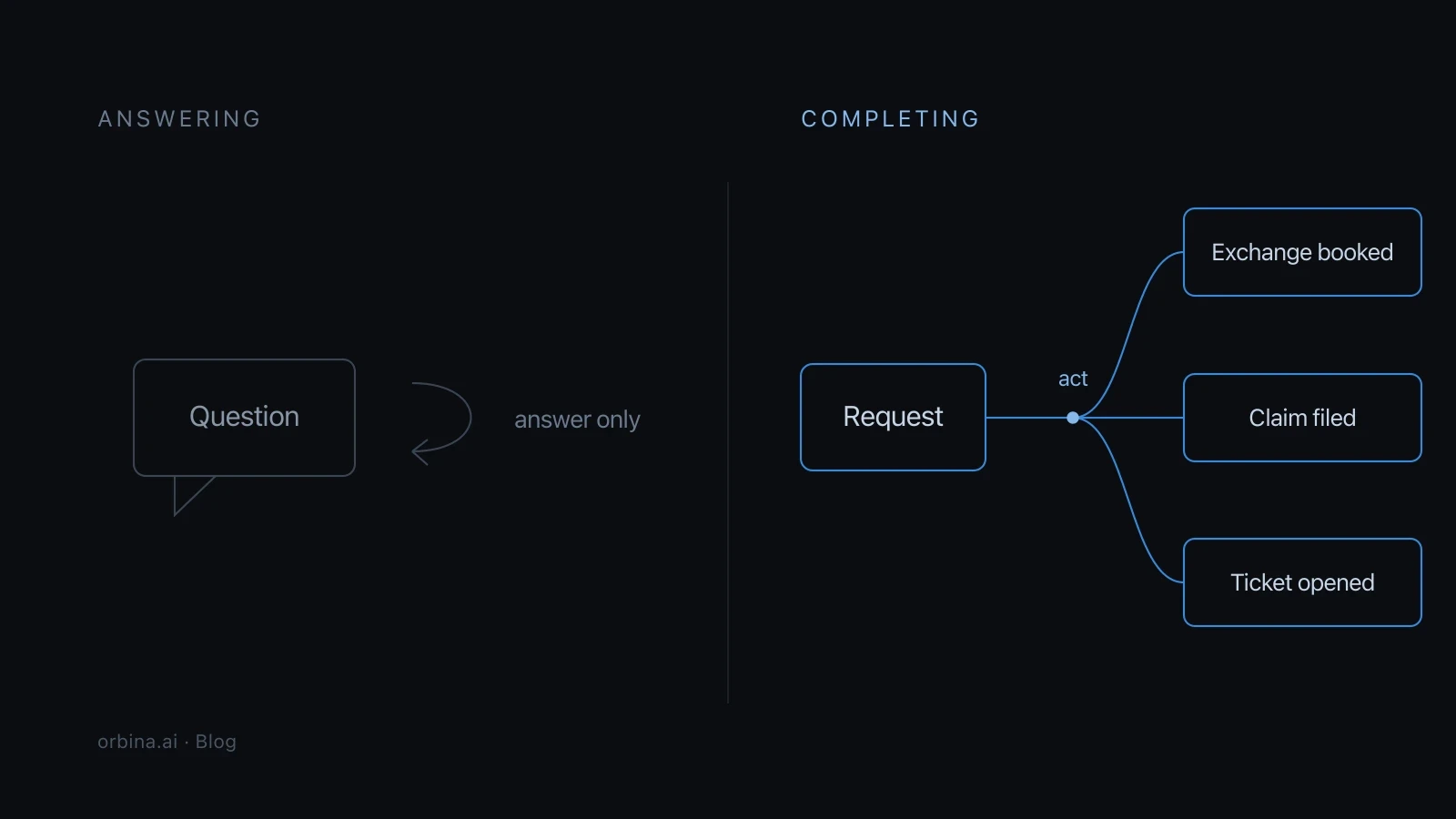
Many AI systems can interpret text, summarize information, or classify inputs. But that alone does not create automation.
For automation to be useful, the system must decide what to do with that information.
That is where decision engines become critical. They sit between understanding and execution.
A typical sequence looks like this:
A request or signal is received.
The AI system interprets the input.
The decision engine evaluates conditions and policies.
The system triggers the next action.
Without this layer, even capable AI systems often remain passive.
Decision Engine vs Rules Engine
A decision engine is often confused with a traditional rules engine, but they are not the same thing.
A rules engine typically applies fixed logic:
If X happens, do Y.
A decision engine can go further by:
evaluating multiple variables at once
considering confidence or risk levels
combining static rules with AI outputs
supporting more dynamic next-step selection
Here is a practical comparison:
Component | Rules Engine | Decision Engine |
|---|---|---|
Logic type | Fixed | Fixed + contextual |
Inputs | Usually structured | Structured + AI-derived signals |
Flexibility | Low to moderate | Higher |
Use case | Simple workflow triggers | Complex workflow routing and decisions |
A decision engine can include rules, but it is usually designed for richer operational logic.
Real-World Examples of Decision Engines
Decision engines are used in many business workflows.
Examples include:
fraud scoring in financial operations
refund eligibility checks in e-commerce
case routing in customer operations
policy validation in insurance workflows
next-best-action recommendations in support systems
In each case, the system must do more than respond. It must choose.
What Inputs Can a Decision Engine Use?
A decision engine can work with multiple types of signals, including:
customer account data
transaction history
workflow status
AI classification results
policy or business rules
risk scores
intent detection outputs
This ability to combine operational data with AI-derived signals is what makes decision engines especially useful in enterprise automation.
Where Decision Engines Fit in AI Architecture
In many enterprise AI systems, the decision engine sits between interpretation and action.
Layer | Role |
|---|---|
Input Layer | Receives user, system, or event input |
AI Layer | Interprets or classifies information |
Decision Engine | Determines the next best action |
Execution Layer | Triggers workflows or updates systems |
This structure helps separate intelligence from execution, making systems more modular and easier to govern.
If you are asking, what is a decision engine in AI systems, the simplest answer is this:
It is the component that decides what should happen next.
As businesses move from AI-assisted interfaces to AI-driven operations, decision engines are becoming more important. They connect interpretation to action and make automation more operationally useful.
That is why decision engines are increasingly central to enterprise AI workflows.
Frequently Asked Questions
What is a decision engine in AI systems?
A decision engine in AI systems evaluates inputs, applies logic, and determines the next best action or outcome within a workflow.
How is a decision engine different from a rules engine?
A rules engine applies fixed logic, while a decision engine can combine multiple variables, AI signals, and operational context to support more dynamic decisions.
Why are decision engines important in AI workflows?
They help AI systems move from interpretation to action by determining what should happen next based on available data and business logic.
What are examples of decision engines in business?
Examples include fraud detection, approval routing, refund eligibility, next-best-action systems, and workflow prioritization.
Can a decision engine use AI outputs?
Yes. Decision engines often use AI outputs such as classification results, intent detection, or risk scoring as part of their logic.
Is a decision engine the same as automation?
Not exactly. Automation executes actions, while a decision engine determines which action should be executed.
Do decision engines only work with structured data?
No. They can combine structured business data with unstructured or AI-derived insights.
Where does a decision engine sit in AI architecture?
It usually sits between interpretation and execution, connecting AI understanding to workflow action.
Can decision engines be used without generative AI?
Yes. Decision engines do not depend on generative AI. They can work with traditional business rules, machine learning outputs, or structured data.
Why are decision engines becoming more important?
Because businesses want AI systems that do more than respond. They want systems that can decide and act intelligently.